
Vibration Analysis · Ireland
Machines whisperbefore theyscream.Continuous vibration monitoring and vibration analysis for rotating machinery.
Bearings developing defects. Shafts running out of balance. Misalignment building before it becomes damage. Every rotating machine has a vibration signature. Continuous wireless IoT monitoring turns that signature into early warning.
Manual vibration rounds leave your machines unmonitored 99% of the time.
A quarterly inspection visit captures one reading per 90 days. Between visits, imbalance builds, bearing wear progresses, and misalignment worsens. The fault is found when it is already expensive. Continuous wireless IoT monitoring changes that entirely.
One reading per quarter
Quarterly or monthly rounds produce a single data point. Every hour between visits is a blind spot where deterioration continues undetected.
No fault progression data
Without continuous data there is no trend to act on. You cannot see whether vibration is stable, slowly rising, or accelerating toward failure.
Found when it is already expensive
By the time a fault shows up in a manual inspection, it has typically been developing for days or weeks. Repair cost and downtime duration are already high.
From asset to insight
in one continuous loop.
Sensors mount magnetically on the motor housing while it is running. Data travels wirelessly via LoRaWAN across the factory floor to the gateway. The Lumina+ platform processes and displays live condition data, alarms, and forecasts.
Magnetic mount. Motor never stops.
One covers an entire factory floor
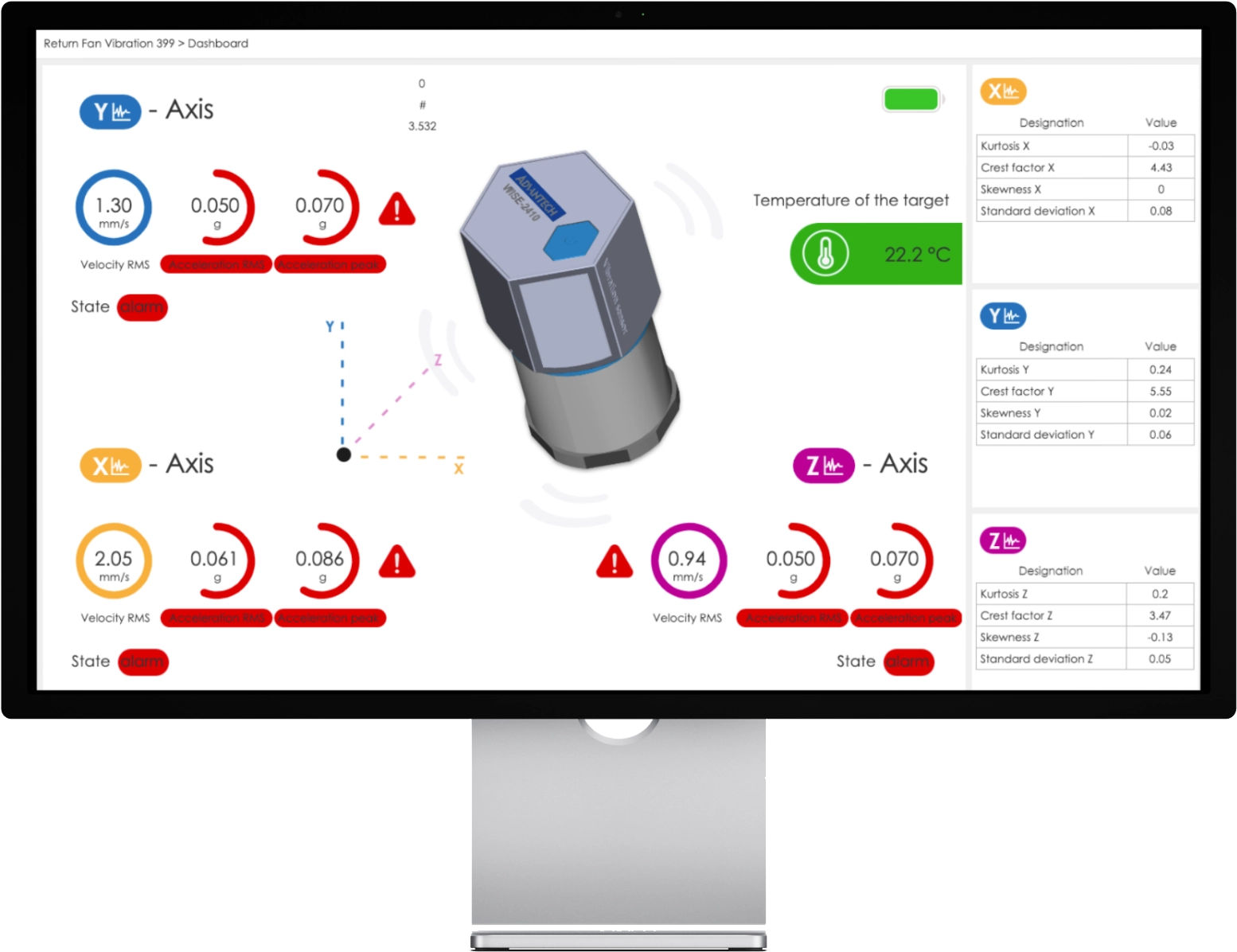
Live data, zone alarms, forecasts
Two tiers. Same sensors. Different depth of intelligence.
Every deployment runs the same wireless IoT hardware. The analytics layer is what you choose.
Continuous condition monitoring
Five independent detection methods running simultaneously, every measurement.
- Vibration severity — ISO 20816-3 zone classification per axis, with Zone C and D breach forecasting days ahead
- Rate of change — catches accelerating deterioration before any threshold is breached
- Baseline deviation — flags when a machine drifts from its own normal, even at safe absolute levels
- Impulsive fault detection — earliest indicator of bearing and gear defects
- Temperature monitoring — immediate threshold alarm on every sensor
Anomaly detection + forecasting
Everything in Standard, plus a machine learning model trained on each asset individually.
- Everything in Standard included
- Risk Score 0–100% — single health indicator per asset, updated continuously. One number. No parameter interpretation needed.
- Anomaly detection — trained on the machine's own operating history. Catches faults that haven't yet triggered any threshold.
- Impending fault forecasting — projected days to Warning and Critical state. Time to plan, order parts, and schedule on your terms.
Faults detected
The rotating assets it is built for.
Designed for rotating machinery between 600 and 15,000 RPM. Wireless IoT sensors mount magnetically on the asset housing and can be installed during a normal production shift without stopping the machine.
Electric motors
The primary target. Bearing wear, rotor issues, and mounting looseness all produce measurable changes in vibration level and kurtosis well before mechanical failure.
Centrifugal pumps
Impeller wear, seal deterioration, and shaft misalignment cause measurable increases in overall vibration and kurtosis. Sensor mounts on the pump casing or motor bearing housing.
Fans and blowers
Highly susceptible to imbalance from fouling, build-up, and blade damage. Rising velocity RMS on one axis is typically the first indicator of mass accumulation on a blade.
Screw compressors
Rotary screw and centrifugal compressors. Bearing deterioration and rotor unbalance tracked through overall vibration trending and kurtosis with empirically configured thresholds.
Gearboxes
Baseline deviation and kurtosis are the primary signals. Gear tooth damage produces impulsive vibration that kurtosis catches early. Thresholds configured above standard ISO values to account for normal gear mesh forces.
Conveyor drives
Drive motors and head and tail pulley bearings monitored simultaneously. Distributed sensors across a conveyor identify which specific bearing has started to deteriorate.
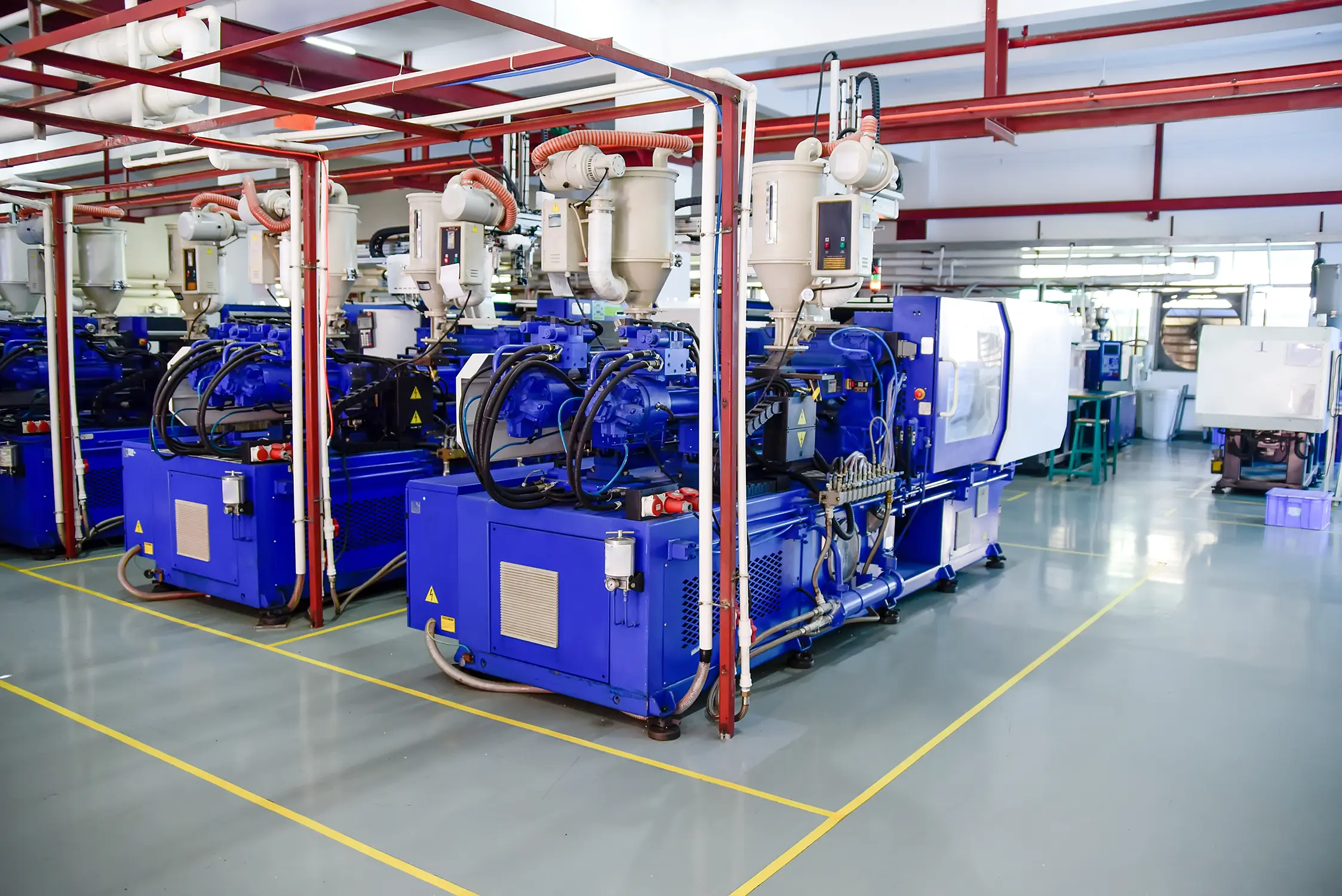
Mergon Group
Four manufacturing sites across Ireland, the USA, Mexico, and the UK. Lumina deployed wireless vibration monitoring across rotating machinery at each facility: sensors mounted directly on motors, pumps, and compressors, LoRaWAN connectivity, and anomaly detection tuned per asset type. No production stoppages during installation at any site.
Read the full case study
Project of the Year — Public Sector
Lumina's IoT condition monitoring deployment at Sport Ireland's National Aquatic Centre detected a boiler fault on a Saturday morning, preventing total heating loss at one of Ireland's busiest sports facilities.
Read the Sport Ireland case studyFind out what your machines are telling you.
Know before it breaks.
A 30-minute call is all it takes. We'll walk through your rotating assets, identify the highest-risk machines, and outline what a wireless vibration monitoring deployment would look like.